Why “Au Chant Des Cigalous”?
Formerly known as La Poumi, in honor of Poupou and Mimi, the former owners in the 1950s, the property was renamed Au Chant Des Cigalous—naturally, to symbolize the cicadas (cigales in French), insects known for their distinctive song in Provence.
However, depending on the year, by early August, guests can hardly hear them anymore and ask me why it’s named that way if there are no “summer singers”?
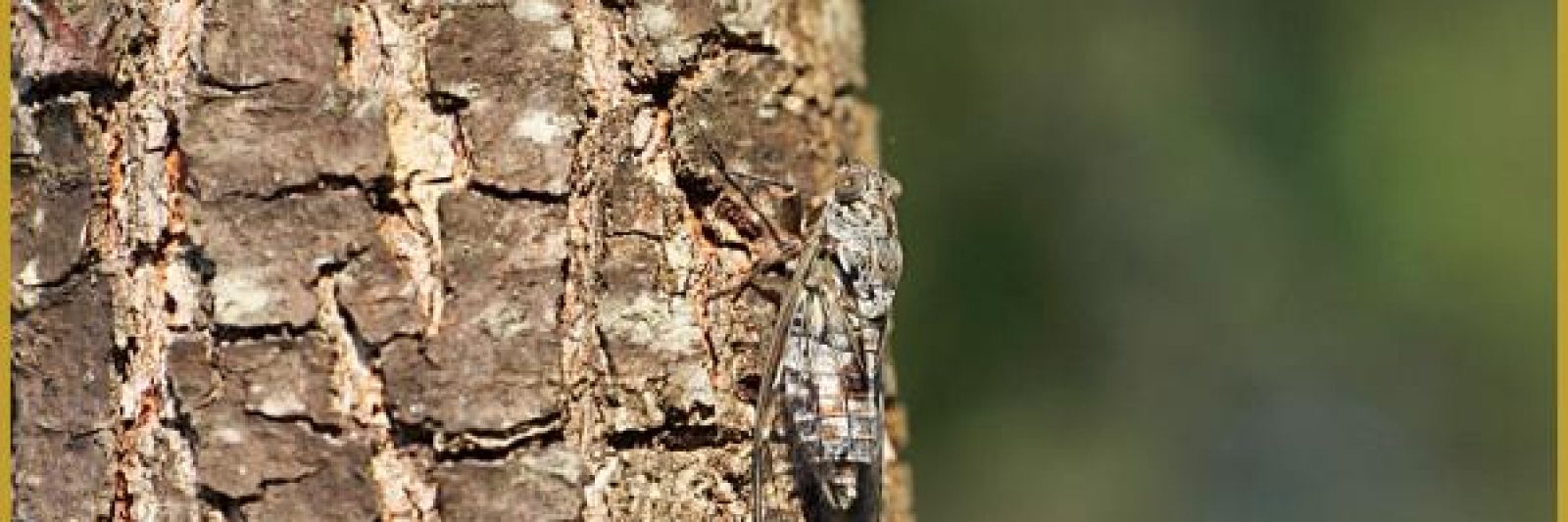
Adult cicadas measure between 2.5 and 3 cm and generally appear from mid-June to mid-July.
Their life in the air lasts only 4 to 6 weeks, devoted to reproduction and singing. They feed exclusively on sap using their rostrums but serve as abundant food for many predators, including ants—with all due respect to Mr. Jean de La Fontaine!
Only the males “sing” to attract females. This sound is produced by specialized organs called cymbals located on their abdomens. The cicada’s song is one of the loudest in the world: between 80 and 100 decibels at a distance of less than one meter (as loud as a lawnmower), with the sound carrying up to 500 meters! They begin to sing when the temperature exceeds 24°C, and their singing intensifies between 28°C and 35°C. Their song is therefore a natural indicator of summer heat, and you can predict a very hot day just by hearing how loud they are in the morning. Sorry to those born in August!
The females then lay between 200 and 400 eggs in cracks in the bark (often on trees such as pines or olive trees).
Only half of the eggs hatch in October, and the larvae fall to the ground and burrow into the soil.
The larvae spend 2 to 5 years (depending on weather conditions) underground, feeding on root sap. Only a fraction of them will become adults.
In June, with temperatures around 25°C and low rainfall, they emerge to undergo their final molt, become adults, continue their life cycle, actively contribute to the Mediterranean ecosystem, and justify the name “Au Chant Des Cigalous” for July vacationers!


