Hike – Gaou Peninsula
Want to discover a little corner of paradise with many faces—well-known to everyone in the Var but still untouched, so peaceful yet so lively, so quintessentially Mediterranean yet with a touch of Brittany when the wind blows?
All of this is right next to your vacation rental at Au Chant des Cigalous: a 10-minute bike ride or a 30-minute walk away…
So follow me to the Pointe du Brusc, starting from the village, passing through the lagoon, all the way to the Gaou Peninsula…
Please note: Closed due to fire risk in strong winds following a fire that broke out in late July 2023…
A bit of history:
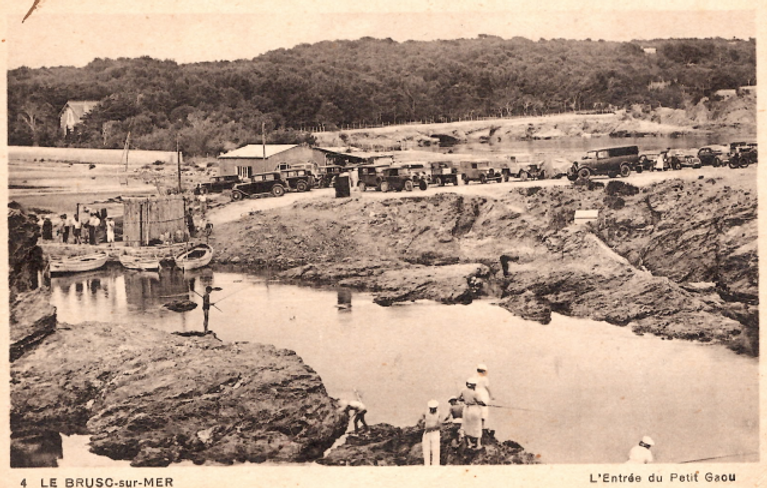
I cannot talk about Le Gaou without mentioning the Lagoon and the village of Le Brusc, as the three are inseparable.
The Tauroeïs trading post (Le Brusc) was built in the 3rd century to supply ships anchored in the harbor for trade between Massilia (Marseille) and Italy.
Before the war, the residents of Le Brusc raised the issue of their independence during a Six-Fours city council meeting. The village did not succeed at the time due to the lack of a cemetery. Although a cemetery was inaugurated in Courrens in the late 19th century, secession was no longer considered, yet Le Brusc still asserts its authenticity and independence!

It wasn’t until the end of World War I that Le Brusc began to attract attention as a burgeoning tourist destination, centered around the family-run Hôtel de la Brise des Pins and the Grand Hôtel Beauséjour. At the time, the village was renowned for its salty sea air, believed to be beneficial for treating general fatigue.
During World War II, Le Brusc was occupied by the Italians and then the Germans before being bombed in June 1944.
After the war, 48 fishing boat captains were active, but the industry gradually declined, and Le Brusc has slowly become a tourist destination with just four fishermen remaining today!
In 1946, the army established itself in Le Brusc with the Naval Research Center and its underwater acoustics “laboratory” for submarine detection (visible from Le Gaou toward the Mont Salva pine forest). Nearly 200 people worked there until the 2000s. Owned by the state, the approximately 37,000 m² of the site, extending toward Mont Salva, is now for sale…
Several hundred workers also worked at La Coudoulière, in the Romain Boyer tile factory, until 1967. He even had the Port de la Coudoulière built there in 1901 to transport the tiles. Today, there are only large tourist complexes and a remnant of that past in the form of the “Maison de Cygne,” which remains an important cultural and scenic landmark in Six-Fours.
In 1958, Paul Ricard (of the famous pastis!) purchased the island of Les Embiez. The salt marshes that had sustained the locals for centuries—as they carried this “white gold” on their backs along the Salt Road from Les Embiez and Le Gaou to Le Brusc for shipment—were permanently abandoned. The island then underwent a transformation until 1963, becoming a tourist destination with its own port, much as Paul Ricard had done previously with the island of Bendor.
So, as you can see, while Le Brusc retains its soul as a typical fishing village, it has resolutely turned toward tourism over time and jealously guards its last remaining wild, unspoiled areas, including the Lagoon—a Natura 2000 site—and Le Gaou.
The Lagoon:

To get to Gaou from your vacation rental at Au Chant Des Cigalous, simply head down to the village and continue along the harbor to reach this vast body of water spanning over 500 hectares, protected to the south by Gaou Island and to the west by Embiez Island.
Less than a meter deep, this lagoon is doubly protected by the Coastal Conservation Agency and has been designated a Natura 2000 site since 2014. It is home to Posidonia seagrass beds. Known as the “lungs of the Mediterranean,” these beds help oxygenate the water and serve as a nursery for the reproduction of many fish species. Note that this is indeed an aquatic plant and not a type of seaweed that you might find washed up on the beach after a storm, turning brownish but protecting the sand from erosion.
All motorized boating, walking, or anchoring is prohibited here.
Only paddleboards and canoes are permitted to preserve the ecosystem of this little paradise without setting foot on land!
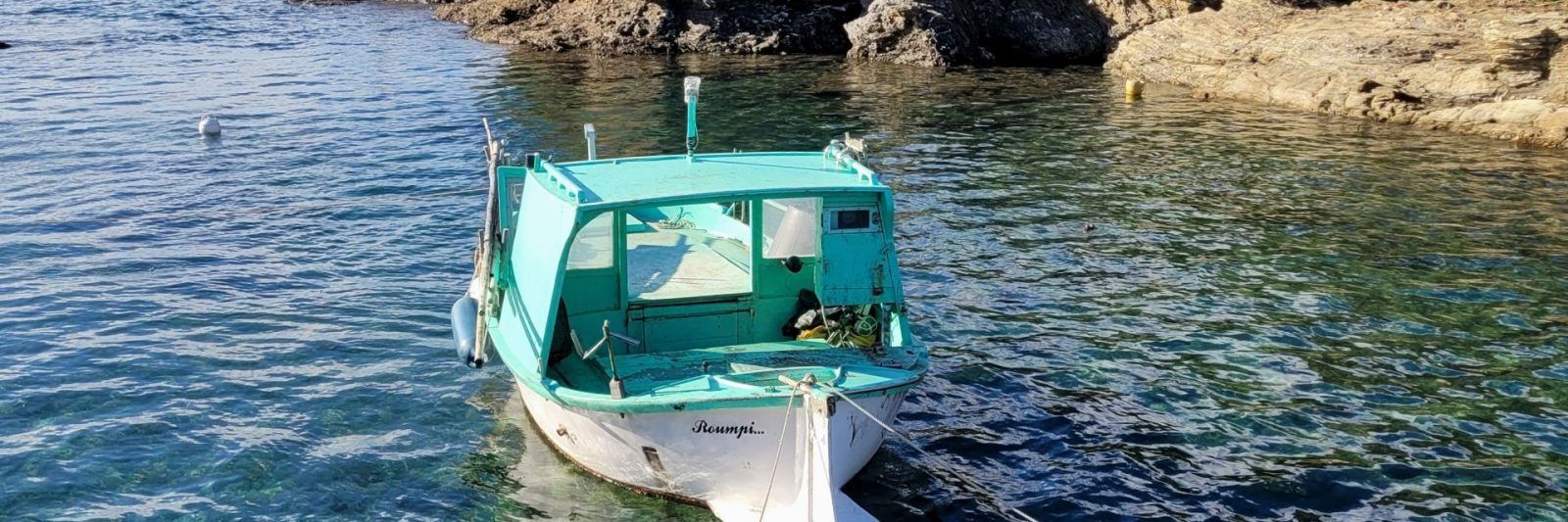
As you walk along the lagoon, you’ll come across a few local boats—the “pointus”—with their vibrant colors, informational signs about the local flora and fauna, and, if you look closely, the posts from the old mussel farm dating back to the 1940s.
The Gaou Peninsula:
A few hundred meters further on, you’ll reach Gaou.
A small, highly sought-after paid parking lot is available just before you arrive, but it’s better to park at the harbor parking lot if you’re driving!
This is a nature park open from 8:00 AM to 8:00 PM, reserved exclusively for pedestrians and bicycles on the first island.
On your right, you’ll find the restaurant Le Vénus du Gaou, very popular in the summer for its breathtaking view of the sea and its burgers!

As you cross the bridge, a stone statue stands in the distance, marking the entrance to the island known as Petit Gaou. It was created in 1961 by Robert Forrer, a scientist, physicist, and sculptor. You wouldn’t guess it, but it stands on top of an old bunker. By creating this “Venus Rising from the Waves,” he left a lasting tribute to his adopted town of Le Brusc, which he loved so dearly and affectionately called “My Paradise.” In 2012, his daughter—who had served as the model—decided to save the work and commissioned repairs to halt the erosion of the limestone, caused by the combined effects of sea spray, salt, and wind.

On your right is the Grand Gaou, accessible only via a footbridge known as the “Petit Pas du Coq,” named after the pass (leave your bikes to the right of the bridge).
This island measures 600 meters at its longest point and 250 meters at its widest, with many nooks and crannies. It is situated between the lagoon to the northeast, where the coastline is low and gentle, and the southwest, where the coastline is elevated, highly indented, and dotted with numerous small coves.
On the Brusc lagoon side, the Bay of Six-Fours unfolds against a backdrop of the mountain range: Gros Cerveau, Mont Caume, the hill of Six-Fours, and its fort.
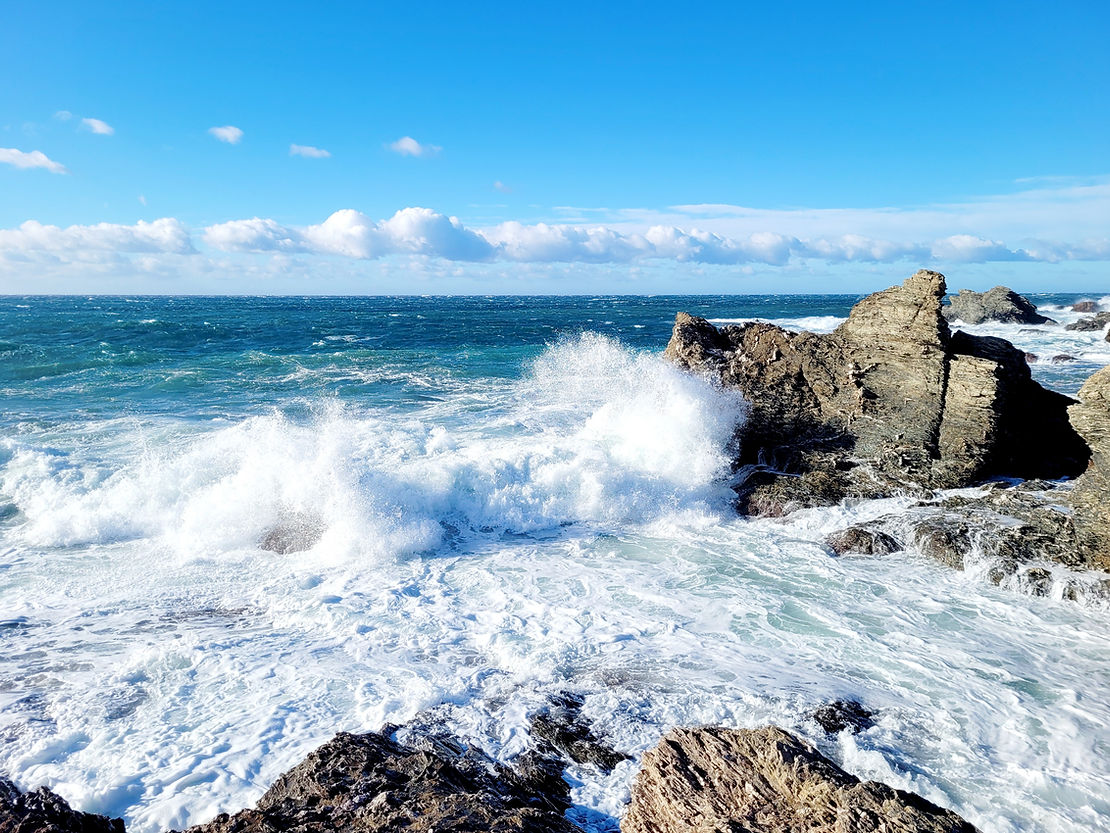
On the opposite side, to the southwest, the sea stretches as far as the eye can see, and the waves—sometimes raging—come crashing down on “this little corner of Brittany.”
To the northwest, a small sandy beach, more sheltered from the wind, overlooks the Grand Pas du Coq, or the Grand Gaou Strait, which separates the island from the Île des Embiez and marks the beginning of the lagoon.
To the east, from Petit Gaou, you can see the cliffs, the Gueirouard headland, and then the Cap Sicié massif, rising to 330 meters with its relay antennas. At the top of the cliffs, in the pine forest, you can make out the GERDSM facilities, which closed in 2000. (Underwater Detection Study and Research Group) of the Ministry of Defense.
In the 1960s, this footbridge didn’t exist, and a ferryman, with his flat-bottomed boat, would take you across in exchange for a small fee paid to a municipal employee.


For a very long time, the Little Gaou served as a parking lot, while a campground was “established” in 1960 on the Big Gaou.


Until 1984, several hundred campers jostled for the few showers and restrooms available and lived in tents or trailers, before they were all evicted in 1985.
Even transporting the trailers was far from eco-friendly!

After this disastrous period lasting more than 30 years, the island of Grand Gaou gained fame in the 1990s with the Gaou Festival and performances by big names such as James Brown and Santana, culminating in the final concert in July 2014 featuring Christophe Maé.
Other events followed through 2023, notably the Pointu Festival.
Since 1995, the municipality has been working to restore and preserve this site, but the fire that broke out in July 2023 marked the end of the festivals. It brought home the fragility of this little corner of paradise, and a referendum put to the residents of Les Six-Fours led to the suspension of festivals and events so that the island could return to its “original” state. The esplanade in the center of the island, which was used for concerts, has already been replanted to welcome back the sound of cicadas!
The stroll:
From the bridge, a breathtaking view of a tiny natural harbor unfolds before you, featuring a few colorful fishing boats, their nets stored on the dock, and an old shed: a photo op is guaranteed in this picturesque spot!

On the other side, there are several trails you can take to walk around the peninsula.
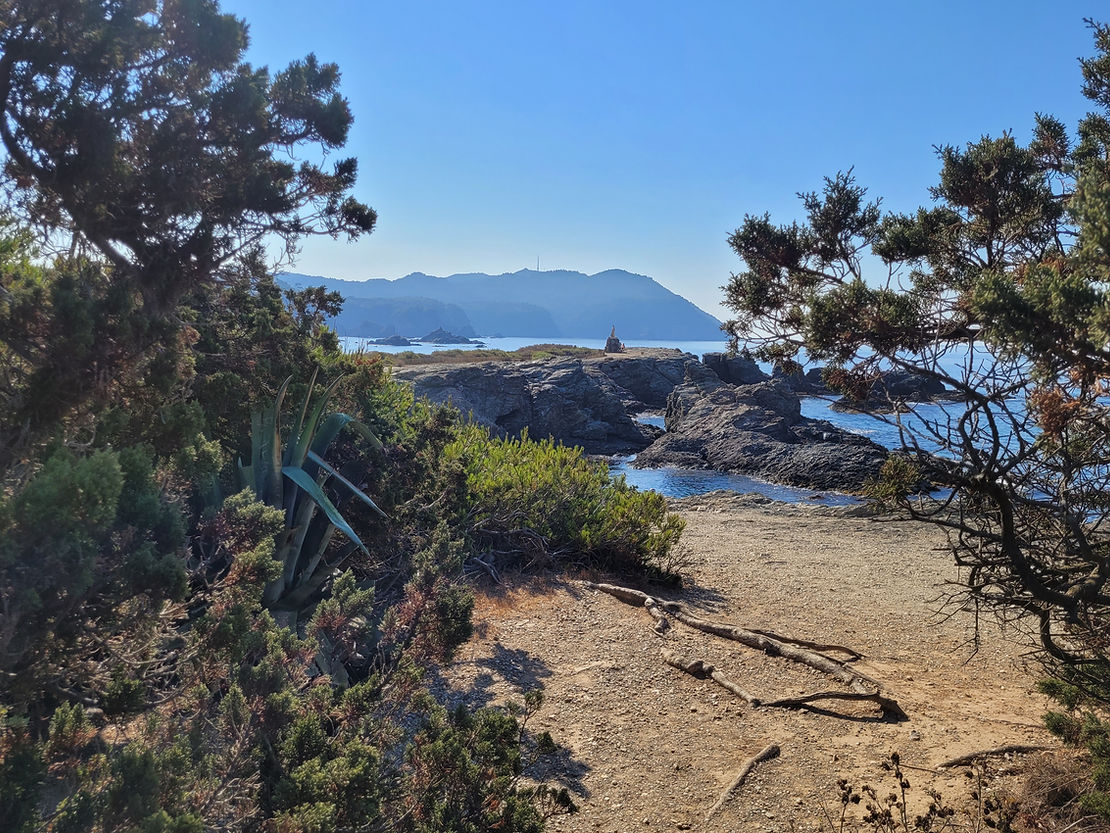
My favorite is still the one on the far left, along this rugged stretch of coastline that overlooks the open sea.

One after another, tiny coves with turquoise waters appear, sometimes with just a few square meters of pebbles for swimming, hidden by pine trees and rocks. In the distance, the Île des Embiez and the naval tower.

At the other end of the island, on the west side, a tiny sandy beach offers a magnificent view of the Île des Embiez, just a few dozen meters away. With a gentle slope, shallow waters, and protection from strong winds, it’s very popular during the summer. It’s best to arrive around 10:00 a.m. to take a dip! You could reach Les Embiez from this beach since the water is shallow enough to wade across, but landing on this private island owned by Paul Ricard is prohibited. In fact, “guards” are stationed on the other side to deter you from doing so!

The fords, which were heavily used until the 1960s, are still visible, but now you have to pay the €20 ferry fare to cross over to Les Embiez from the port of Le Brusc!
Return via the left, beneath the maritime pines and umbrella pines. Sculpted by the wind, they are called anemomorphic pines, with their twisted trunks shaped by the mistral…

The heady scent of resin and the song of cicadas, which lasts until the end of July, will accompany you along the way…
This part of the island, overlooking the lagoon, is protected by wooden barriers and off-limits to swimmers to preserve the local flora and fauna. This trail wraps up our walk in less than an hour and takes us back to the footbridge.
Back in Le Brusc, have a drink to recover from your adventures at Le Piadon, an authentic Provençal bar near the fishermen’s association…
Already missing Le Gaou?
Why not come back on a windy day to watch the waves crash against the rocks, or catch the sunset when the glowing sky turns golden?


